Table Of Content

You can use it to remove hair anywhere on the face, such as the upper lip and chin, except around the eyelids and surrounding areas. This may be less effective than professional hair removal but may be sufficient for your needs. If you are concerned about any excessive hair growth, it’s important to raise questions on the matter to your doctor of choice. That way, you’ll be able to approach your hair growth with medical expertise and even rule out disorders that need medical management. O’Donnell’s candor is to be respected, but when those random chin hairs sprout seemingly out of nowhere, it’s normal to wonder why it’s happening in the first place ― and what you can do about them. We asked an endocrinologist and a dermatologist to share everything you need to know.
Late-onset congenital adrenal hyperplasia
Excess facial or body hair is often a symptom of an underlying medical problem. See your doctor for assessment if over a few months you experience severe or rapid hair growth on your face or body or signs of virilization. You may be referred to a doctor who specializes in hormone disorders (endocrinologist) or skin problems (dermatologist).
When Is Facial Hair Growth a Sign of Hormonal Imbalance?
There are a number of medications that count hair growth as a side effect, including anabolic steroids, as well as certain kinds of chemotherapy and epilepsy treatments. “Congenital adrenal hyperplasia” is an umbrella term that describes a range of different adrenal gland disorders. Some people are born with these conditions, while others experience them later in life.
More On Women's Health
Electrolysis is an effective way to remove chin hair permanently, but it has some drawbacks. "The electrolysis process is tedious, time-consuming, painful, and can result in punctate scarring," Sartor says. "For these reasons, it is not a practical means of hair removal for large areas of unwanted hair."
Polycystic ovary syndrome (PCOS)
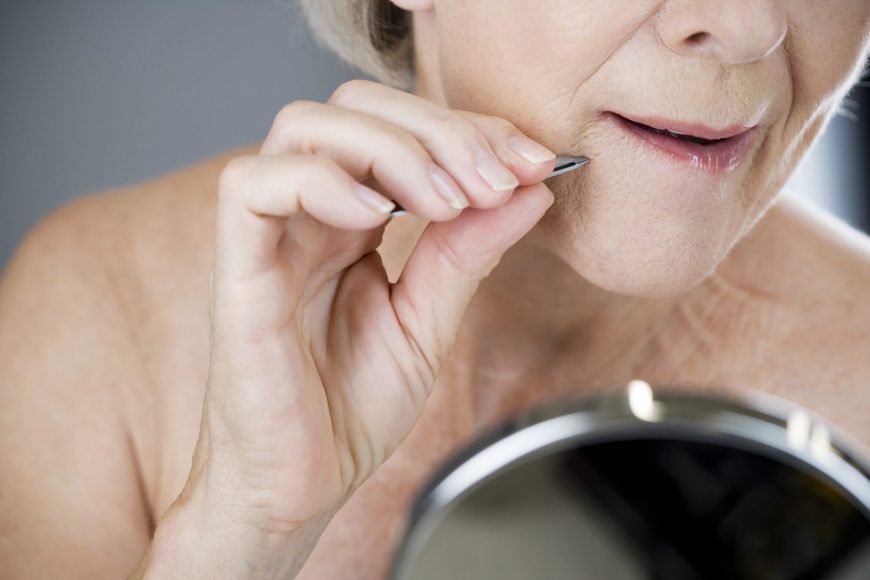
Simply plucking the stray chin hairs is the speediest way to remove them. If you have more than a stray, you may want to consider electrolysis or laser hair removal for more effective clearance, says King. “Chin hair results from a combination of genetics and hormones,” says Hadley King, M.D., board-certified dermatologist at New York’s SKINNEY Medspa. It’s our male hormones (called androgens), as well as our overall hormonal balance, that stimulate growth of chin hair, she explains. Preventing chin hairs from growing is easier said than done, but it isn't impossible.
Corticosteroid medications such as prednisone and prednisolone used to treat arthritis and asthma can cause Cushing syndrome and produce unwanted facial hair. When we lose or gain a significant amount of weight in a short period of time, it messes with our hormones. The resulting imbalance often results in an increase in facial hair.
That sensitivity and the levels of hormones at play are generally determined by genetics. So if grandma has a fuzzy chin, it’s likely you’ll end up with one, too. The Ferriman-Gallwey index is a method to score the degree of male pattern body hair growth in women.
When does chin hair start growing for women?
If your skin doesn’t develop an allergic reaction, follow the right steps to wax your facial hair. For the best results, clean your face and apply a layer of soap or shaving cream. This promotes a smooth surface and reduces the likelihood of cuts. Glide the shaver over your face in the direction of hair growth. While some of us are happy to decorate our chin hair with beads, others might want to get rid of it. Luckily, Green said, there’s a lot you can do if that’s the case.
Woman With PCOS Broke Guinness World Record for Longest Female Beard - Business Insider
Woman With PCOS Broke Guinness World Record for Longest Female Beard.
Posted: Sat, 12 Aug 2023 07:00:00 GMT [source]
Various conditions can cause your body to make too many androgens. Sometimes, a person’s androgen levels may be normal, but their hair follicles are overly sensitive to male hormones. This is called follicle sensitivity, and it can also lead to hirsutism.
It’s fairly common and affects between 5 to 10 percent of women. Certain hormones—specifically androgen or other "male hormones" like testosterone—can cause you to grow some thicker and darker hairs here and there if they ever get out of balance. Depending on the cause of your facial hair growth, your hair removal options will vary. And, whether your hair growth is the result of hormone imbalance or genetics, there’s always the option to tweeze, bleach, wax, and laser it away if it bothers you. Depending on your health history, you may be more prone to robust body hair growth. If you're not an ideal candidate for laser or other treatments, Dr. Yang and Dr. Garshick recommend hair removal creams as a good alternative.
"Both birth control pills and spironolactone can lead to significant side effects and should be monitored with regular office visits," Sartor says. While many times it is linked to polycystic ovarian syndrome (PCOS) or hormonal imbalance, it can also be a side effect of some medicines, as per Metro.co.uk. Sugaring is similar to waxing in that it involves pulling hair out from the root, but there is one major difference. You apply wax in the same direction as hair growth and then remove hair by pulling in the opposite direction. While these creams can remove hair on any part of the body, some creams are designed specifically for facial hair.
It consists of pictures of hair distribution on the upper lip, chin, chest, back, abdomen, arm, forearm, thigh, and lower leg. Each area is scored from 0 to 4, with 4 being heavy hair growth. After each area is scored, the numbers are added together for a total score. However, Dr. Garshick says don't go tweezer-happy plucking your facial hair to avoid ingrown hairs and irritation.
Your hormone levels shift periodically and throughout your lifetime because of aging, weight gain, and other factors, including pregnancy and menopause. Everyone has hair on their chin and this is perfectly normal. We all have vellus follicles that produce very fine, tiny light-colored hair that is often referred to as “peach fuzz”. Vellus hair serves a purpose, which is to help regulate our body temperature. Being increasingly thirsty, urinating more frequently, and feeling weak and fatigued are all ways your body tries to tell you it's experiencing issues related to insulin resistance. Your doc can order blood tests to determine if you have, say, diabetes.
Hirsutism isn’t the same as hypertrichosis, which refers to excess hair in areas that aren’t dependent on androgens. The main difference between more typical hair on a woman’s body and face (often referred to as “peach fuzz”) and hair caused by hirsutism is the texture. When caused by hirsutism, the hair on a woman’s face, arms, chest, stomach, back, or chest is usually coarse and dark. "If you have a stubborn ingrown hair, I would recommend seeing your dermatologist," says Carqueville.


No comments:
Post a Comment